Search results for: {search_term_string}/page/house-insurance-calculator
Accidental damage is irksome, someone or something has damaged your property and it needs to be made right. Don’t worry, that’s what you’ve got home and contents insurance for and we’re here to help.
IMPORTANT: If your house is unsecured, unsafe or vulnerable to more damage, get a professional to make the house safe and we can work through the costs together later.
If you think your claim will be under $5,000, here’s what you need to do:
- Take photos of the damage.
- Get a quote to repair any damage.
- Log in your dashboard on the initio website and click on ‘Make a Claim’. Fill in the form and attach your photos and quotes.
- We’ll email or call you within one business day.
If the damage is severe, we might need an assessor’s opinion, here’s what you need to do:
- Log in to your dashboard on the initio website and click on ‘Make a Claim’. Fill in the form and attach any photos you’ve taken.
- We’ll email or call you within one business day.
FAQ’s:
- Can I use my own repairer or do initio have approved repairers that I must use?
You can use any repairer you like, as long as their costs are reasonable and you’re happy with the standard of work, then we’re happy.
- Who will pay my excess: me, or the person who damaged my house?
This is case-by-case. If a tenant caused the damage accidentally, then we cannot hold them responsible. However, if a neighbour accidentally drives through your fence, then we’ll probably be able to get the money back from their insurance company and your excess will be reimbursed to you.
“All claims are different and they are assessed on their own merits and facts. The above does not imply a guaranteed approach to all such claims”
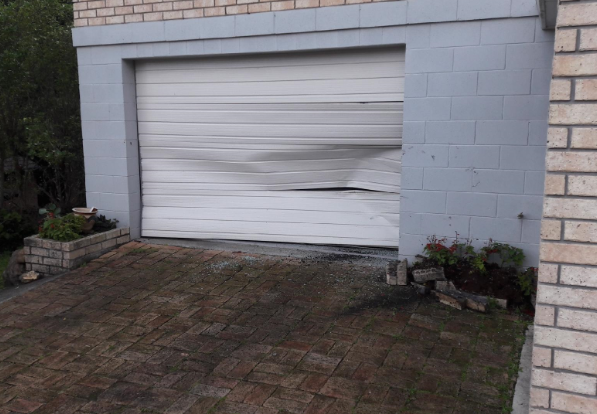
A stranger accidentally reversed their car into this garage door, damaging not only the door, but block work too. Initio worked with the property manager and repairer to get the door replaced and brickwork repaired efficiently and with as little fuss as possible to the tenants. Best of all, initio recovered the costs from the driver and refunded the excess to the insured.
Related articles
Meth Contamination is one of the largest loss leaders for landlords in New Zealand. Cleaning costs for a well-contaminated house can easily cost over $10,000.
Do I need to test for meth before renting out my property?
Regular meth testing isn’t a requirement under initio’s landlord insurance. However, we recommend testing at key times – such as between tenancies, when buying a property, or if you suspect drug use or manufacture.
With initio’s landlord cover:
- Meth testing and cleaning are covered up to $30,000 if a positive reading over 1.5 μg occurs during the insured period.
- Loss of rent may also be covered while the property is being decontaminated.
For Unlawful Substances liability cover specifically, you must test before and after each tenancy to have that liability protection in place.
For more details, see our guidance and claims info:
When do we cover meth testing and cleaning costs?
If you have our landlord cover and you get a positive reading over 1.5 μg from an event during the insured period, our meth cover applies.
We’ll pay up to $30,000 for testing and cleaning the house back to a level below 1.5 μg. A higher $2,500 excess applies to meth however in most cases this cost comfortably exceeded.
Loss of Rent
It can take several weeks, or even months for a property to be fully cleaned for meth. During this cleaning your property won’t be able to be rented.
Our landlord insurance will also cover the lost rents during this period, over and above the $30,000 limit for meth cleaning. We’ll cover the rents until either the property is cleaned (and can be rented again), or the loss of rent limit you selected on your policy has been reached (usually $20,000).
What do I need to do to have meth cover?
To have meth contamination cover you’ll need to meet our landlord obligations. Please make sure you’re doing these so you’re not caught out when you need to make a meth claim.
For details on when meth testing is required, see here.
What do I need to do to insure a home which already has meth contamination?
At initio, we are unable to provide cover for a home that is already contaminated above 1.5μg/100cm2. If you want to insure a home with contamination above that level, you’ll need to arrange for a professional clean and a subsequent report from the provider confirming the property has been cleaned to below those levels. We can then consider cover for you.
Protect your rental with initio’s landlord insurance
Get a quote in seconds
Related articles:
An Interested Party is someone who has a financial interest in something you own. On an insurance policy, it’s usually a bank or finance company that have an interest in the property or vehicle you are insuring. Most likely, you have a loan or a mortgage on that item with them.
If you’re buying a house with a mortgage or a car on finance, the lender usually needs their name listed on the insurance certificate. If you’re the only person or entity with a financial interest you won’t need to list an interested party.
Need to change the Interested Party on your Policy?
You can change the interested party on your house insurance policy yourself at any time. Simply login to your initio dashboard and select the Make a Change option on the relevant policy. Then choose the option to change the Interested Party.
You can select the bank or finance company from our interested party dropdown list or choose “other” from that list, to nominate a party not shown. If you need to name more than one interested party, please choose the “other” option from the dropdownlist, then provide the name of both parties in the one field provided.
All changes are instant and a new certificate will be provided upon confirmation of the change. If you need to future date a change, please use the “other” field in the dropdown list, then provide the name of the new interested party along with the date of the change, eg. “BNZ Limited, with effect from the 1st March 2024”. This information will then be provided in the updated certificate.
If you have home and contents insurance with initio and your home suffers water damage, here’s what you need to do:
- Get the water turned off or at least isolate the leak to stop water flowing to it. You might need to get a plumber to do this for you.
- Make sure the house is safe. If the wiring could be wet, turn the power off and get an electrician to check it.
- Get the house dry quickly. Call a professional drying company such as ChemDry or JAE and get them to install some commercial dryers and blowers as soon as possible, they’ll also know if carpets need to be uplifted, walls opened and insulation removed etc.
- Log in to your dashboard on the initio website and click on Make a Claim, fill in the form and send us any photos you’ve taken. We’ll email or call you within 1 business day.
Black water alert
As a precaution, where homes have been contaminated by black water (sewage or storm water), extra care must be taken. See our guidelines on black water and cleaning up after a flood.
FAQs
Will Initio send an assessor?
An assessor won’t be able to do anything until the property is dry. If there is significant damage to your home afterwards, then we can get an assessor to go to site.
Can I use any plumber, electrician, drying company, or do Initio have approved companies that I must use?
You can use any repairer or supplier you like. So long as their costs are reasonable and you are happy with the standard of work, then we’re happy. Please be aware that in some instances the cost of the tradesman’s work may not be covered under your policy, that may still need to be determined.
What is my excess?
This amount is chosen by you when you buy the insurance, if you can’t remember, just check your policy schedule (you’ll find this document on your dashboard).
Our plumber has told us that the leak was caused by a rusted nail in a pipe in the wall, it’s been slowly leaking for the past few weeks but we’ve only just noticed it. Is this covered?
Because the damage has been happening over a long period of time, we need to claim under the ‘Hidden Gradual Damage’ benefit of the insurance policy. This benefit covers leaks stemming from internal water pipes and tanks that are hidden from site and have been leaking over a long period of time, the cover is capped at $3,000 and your excess will be deducted from that limit.
“All claims are different and they are assessed on their own merits and facts. The above does not imply a guaranteed approach to all such claims”
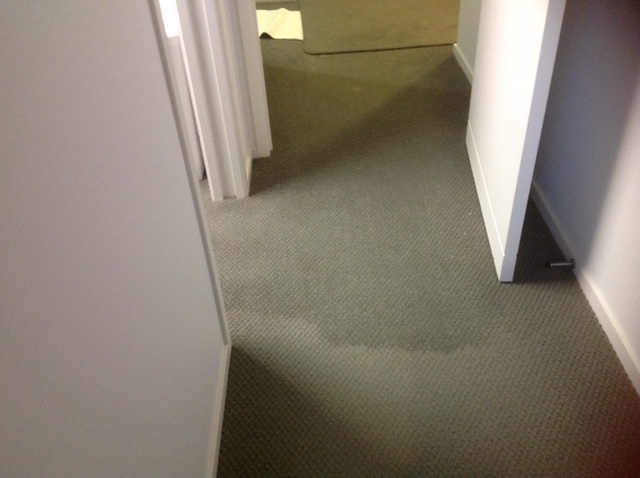
An initio customer returned from a holiday overseas to discover a sudden burst pipe had resulted in almost $8,500 worth of damage. Initio paid the claim efficiently, straight to the customer’s bank account.
Related articles
Do you ever get that sinking feeling that your claim might be denied? Do not worry, we’ve got your back! Here at initio, we’re here to help make sense of insurance claims.

Picture this: your furry friend decides to redecorate your living room by adding some stylish chew marks to your carpet. But then you realise the repair bill is more jaw-dropping than the damage itself. Perhaps a car drives into the side of your house, or maybe you accidentally run over your golf clubs with your lawn mower.
Do you file a claim? Absolutely!
As your trusty insurance provider, it’s our job to come to the rescue. Paying claims is what we do best – it’s practically our superpower! Which is why we have made this process as easy as possible.
Our tech-savvy system, which we call Smart Claims, guides you through each step, asking all the right questions and ensuring that the info you provide is spot-on. The Smart Claims technology is all about putting people first and making the claims process as easy and fast as possible.
Here’s something to keep in mind: if you’re ever unsure about filing a claim, it’s always worth going ahead. Our smart claims platform will guide you through all the relevant questions we need answered. This means that when it comes time to process your claim, we have all the details we need.
There might be times we’ll need more information from you, but these instances are few and far between. It’s also worth mentioning that you can never have too many photos or documentation. The more evidence you can provide, the smoother the process will be in the long run.
At initio insurance, we’re not just about policies and premiums – we’re about making your life easier, because let’s face it, who doesn’t love a hassle-free insurance experience?
USEFUL LINKS
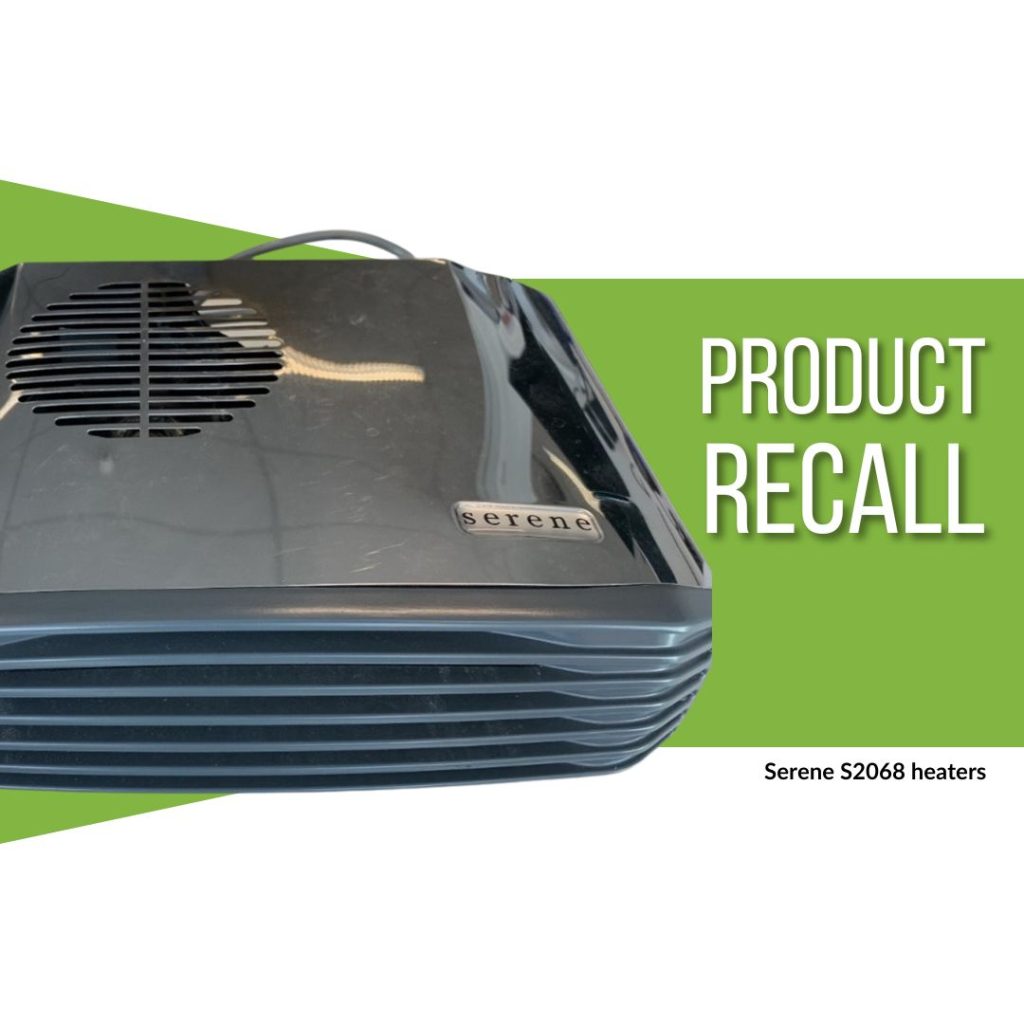
You might not give your bathroom heater much thought, but if it’s a Serene S2068 model, it’s time to pay attention.
MBIE recently reminded Kiwis that 28,000 recalled heaters are still installed in homes, despite a compulsory recall issued last year. These wall-mounted bathroom heaters pose a serious fire risk, and fires linked to these units have already occurred.
If you’re a homeowner or landlord, it’s important to check your bathrooms (and any properties you’re responsible for) to see if you have a Serene S2068 bathroom heater. If you do, turn it off immediately and contact the supplier you bought it from. MBIE’s full recall details can be found here.
Why this matters for insurance
Beyond the obvious safety risks, there are also insurance implications. According to MBIE, the Insurance Council of New Zealand has advised that damage from a fire caused by these recalled heaters may not be covered, especially if you have knowingly disregarded the official recall instructions.
At initio, we want to make sure our customers stay safe and covered. That means staying informed and proactive when it comes to known risks like this one. If you’re aware of a product recall and choose to ignore it, you could jeopardise your cover if something goes wrong.
What you should do now
- Check your bathroom heater. If it’s a Serene S2068, stop using it.
- Spread the word. Tell friends, family, and tenants to check theirs too.
- Act quickly. Contact the supplier or an electrician to safely remove the heater.
Being aware of risks like these is part of being a responsible property owner, and it helps protect not just your home, but your insurance cover too.
OTHER ARTICLES
The recent case of a rented dwelling being fire damaged by a tenant serving home detention has brought to light serous issues for property owners.
As things stand there is no legal responsibility for tenants to disclose to their landlord that there is anyone living at the address that is serving home detention. This may cause complications for property owners if the property is damaged and they try and claim on their insurance cover.
Initio Insurance, who operate a dedicated online rental property underwriting agency, is concerned that this non-disclosure could mean landlords fall short of their insurance obligations to notify their insurers of all material facts. Material non-disclosure is one of the leading reasons why insurance claims are declined.
Rene Swindley, Managing Director of Initio, states that “property owners make a significant investment in their properties. It is for this reason that landlords need to apply greater vigilance to discover who is actually tenanting their property”. As a landlord it is important to notify the insurer of any information that may affect the insurance. “We suggest that landlords incorporate this notification process into their regular property inspection and review program”.
Its that time of year again. The clocks have been moved forward and we are now closer to summer. If you have a holiday home its important that you protect everyone who may stay by maintaining your smoke alarms.
1. Clean smoke alarms to ensure they are free from dust and cobwebs.
2. Test smoke alarms to make sure they are operational.
3. Replace batteries if they are more than 1 year old.
If you own a rental property, make smoke alarms a part of the property inspections performed at your property. You are protecting a major asset and the safety of your tenants. We recommend you go a step further a supply smoke alarms and replacement batteries to all properties you own.
While having good rental property insurance and holiday home insurance is an essential ‘safety net’, its always best to be proactive in protecting your property. Initio Rental Property Insurance is one of the only specialist rental property and holiday home insurance providers in New Zealand. Initio knows rental insurance.
Have you ever wondered what you would do if you had a claim on your property? At initio we have compiled a step by step guide to help you navigate making a claim.
Step 1. Secure your Property
Take care of yourself and your property to prevent further loss or damage, if you need to, contact emergency services such as fire or police.
Step 2. Make a Claim
Login to your initio dashboard and click ‘make a claim’ answer the questions and upload any relevant documentation such as receipts, quotes, police reports, and photos. If you have any additional details or forget to send something initially, you can email it to us: [email protected]
If your claim is urgent and you need to speak to someone, call 0800 763 929, or 0800 560 333 outside business hours.
Step 3. Leave it to Initio
Our Claims Manager will be in touch with the next steps. If required we may send an assessor to your property to review and assist with the claim process.
Step 4. Contact Details
Keep an eye on your emails and initio dashboard for claims updates and notifications. Make sure that we have the contact details for your tenants and property manager in case we need to liaise with them directly to arrange access.
Step 5. Practical tips
Here are some other things you can do, to assist initio in getting your claim resolved quickly.
- Take photos of the damage, if your claim is straightforward we might be able to use these to assess your damage.
- If you have water damage, contact JAE on 0800 225 552 (or another commercial drying company) to arrange cleaning and drying.
- Arrange for a repairer to view the damage, report on the cause (if they’re able to) and provide a quotation to repair.
- Provide us with receipts, or model numbers for items that are damaged or stolen.
- Three monthly property inspection reports are required for contamination or deliberate damage by tenant claims.
- If you are claiming for loss of rent we will need a copy of the tenancy agreement.
Learn more about how to make a claim with initio
Your initio home insurance policy covers sudden, accidental damage to your home. An insurance policy is designed to help you recover from unexpected losses that can not be prevented. It is not a maintenance contract, and is not designed to cover wear and tear.
With any insurance policy there are losses that are uninsurable. If an insurance policy covered absolutely everything, it would be unaffordable. One of these uninsurable losses is mildew, rot, corrosion, rust or gradual deterioration.
Gradual deterioration is damage that occurs over time, and based on the above statement would not be covered by your policy. However, the initio policy includes an extension for ‘Hidden Gradual Damage’ which gives you back some cover.
What does the Hidden Gradual Damage Extension Cover?
Initio’s Hidden Gradual Damage Extension covers you for the resultant damage caused by water accidentally leaking or overflowing from an internal water pipe at your home. It is important to note it does not cover the costs to repair the leak; with our consent we will cover the cost to locate the leak. The maximum amount we will pay under this extension is $3,000 including GST.
Example of Hidden Gradual Damage
You notice that the carpet in your bedroom is wet, upon further investigation you discover that water is coming from an adjoining bathroom. A plumber removes the wall lining to locate the source of the leak, discovers a leaking pipe and repairs the leak. You lodge an insurance claim online, and a drying company (such as Jae’s) are sent to dry out the flooring. A builder is instructed to repair the hole in the wall lining, arranges for a plasterer and painter to complete the job. For the purpose of this example you have a $400 excess.
What costs are claimable?
| Supplier |
Amount |
Description |
Claimable? |
| Plumber’s invoice: |
$700 |
Locating the leak |
Yes, if initio have given consent |
| Drying invoice: |
$500 |
Dry out flooring and wall |
Yes |
| Builder’s invoice: |
$2,000 |
Repair the wall, plaster & paint |
Yes |
| TOTAL |
$3,200 |
Total claimable costs |
|
|
|
|
|
| Plumber’s invoice: |
$1,100 |
Repair the leaking pipe |
No, not included in the cover |
|
$4,300 |
Total repair costs |
|
So, How much will I get paid?
While the total repair costs are $4,300, the total claimable costs are $3,200. As the maximum amount payable under the Hidden Gradual Damage extension is $3,000. In this example initio will cash settle you $2,600 ($3,000 limit less your $400 excess) directly to your nominated bank account.
We can not insure properties that are owned under a Body Corporate. Our cover is designed for domestic residential houses that have a single owner. Under a Body Corporate there is a manager that collectively is responsible for insuring all the units on behalf of each owner. This is common where there’s a large number of living units such as an apartment block.
We can only cover residential houses, or multi-unit rentals where the ownership is not under a Body Corporate.
At Initio we use our technology to pay claims. We’ve made it our mission to cut the nonsense and pay claims fast. Our best yet is money in a customers bank account within an hour of us opening the claim. We call this the initio 6 star experience.


Holiday home insurance is good but risk management is even better
Identifying and eliminating risks in your holiday home is important for the ongoing enjoyment of your property. As Initio insurance handles a large number of holiday home claims, it has identified the top 3 causes of loss in holiday homes. Initio also has some great advice to stop these things happening in the first place.
#1 Water Damage:
The number one cause of loss in holiday homes for Initio is water damage. In many cases leaking or burst pipes cause significant damage while properties are unattended. The damage is only discovered when holiday makers arrive at the property to start relaxing, and are instead faced with the smell of rotting carpets.
Risk management includes prevention of loss or damage and general up keep of your property, Initio’s top tips for counteracting loss include:
- Turn off the water at the mains whenever tenants and family leave the property for more than a week
- Clean guttering and keep it clear
- Respond immediately to any concerns that tenants or visitors may have about the property’s condition
- Visit the property at least every 6 months to check for any signs of damage or run down structures, and arrange repairs.
# 2 Storm Damage:
Another common cause of water damage is from storms and flooding. While no one can prevent such events we can try to minimise the damage caused by them.
- Secure any outside structures, such as trampolines and children’s play structures.
- Take down umbrellas and move outdoor furniture inside when you leave – anything not nailed down can fly and cause serious damage in a storm.
- Keep trees trimmed and remove any overhanging branches. This will help to keep the gutters clear and prevent branches breaking off and damaging your home.
#3 Burglary / Break-in
Holiday Homes are often vacant and are an easy target for opportunistic thieves. There are steps that you can take to prevent having to deal with the heartache and distress of someone illegally entering your property, and ultimately having to make a claim on your policy. Here are some tips to prevent opportunistic burglars from targeting and gaining access to your property.
- Check window joinery and replace or repair any loose latches.
- Consider installing security stays on windows.
- Fit deadlocks / deadbolts to all external doors; especially older doors and ranch sliders which can be easier to obtain access.
- Install a burglar alarm and advertise the presence of an alarm.
- Install exterior sensor lights, or check that existing lights are working correctly
- Don’t advertise when you are away; keep the lawns mowed and the mail box clear.
- Develop friendships with neighbours and keep an eye on each others properties.
In addition, Initio recommends the following general things to reduce risk.
- Test smoke alarms to make sure they are operational, and free of dust and cobwebs.
- Unplug your television, oven and other appliances to protect them from power surges
Insurance is there when you need it but if you can avoid a claim in the first place you will still be better off.
Learn more about holiday home insurance here
find out about all of the initio property insurance products here
The Government recently commissioned Sir Peter Gluckman to prepare a report on meth. The report identified that in other countries meth investigations focused on identifying meth labs, and that the New Zealand approach is to hold meth labs and meth smoking to the same standard.
This has caused a lot of unnecessary cost to landlords and their insurers. Gluckman recommends that the standard measure of of 1.5 μg/100 cm2 should be increased tenfold. Yet, months after Gluckman’s findings the recommendations have not been universally adopted by Government agencies and insurers.
Gluckman Report Summary – The two types of Meth Contamination
1. Making meth
The report outlined how passive, third-hand exposure to methamphetamine can arise through residing in a dwelling previously used as a clandestine meth lab. There’s evidence for adverse physiological and behavioural symptoms associated with third-hand exposure to former meth labs, but these are normally tied to the use of other toxic chemicals in the environment during the manufacturing process, rather than to the meth itself.
2. Using meth
Gluckman also found there is currently no evidence (in either humans or animals) that third-hand exposure to methamphetamine smoking residues on household surfaces can cause negative health effects.
The bottom line
The report concludes that:
- Levels below 15 μg/100 cm2 isn’t likely to negatively effect people.
- Cleaning properties according to the existing standard is needed only for former meth labs and properties.
Who has adapted the recommendation?
- Housing New Zealand immediately raised its trigger with the report’s recommendations and said they would only test when heavy use was suspected. Having spent over $100m on trying to clean meth houses, it’s great that HNZ took action quickly.
- Real Estate Authority (REA) issued new disclosure guidelines for agents in the wake of Gluckman’s bombshell report. Real estate agents now only have to tell potential buyers if a property has a reading over 15 μg.
- The Tenancy Tribunal – at the 2018 NZPIF annual conference the tenancy tribunal’s principal tenancy adjudicator Melissa Poole confirmed orders for contamination lodged after the Gluckman report will follow the 15μg level.
Who hasn’t adopted Gluckman’s recommendation?
- MOH (Ministry of Health) still uses the June 2017 standard of 1.5 μg.
Insurance companies typically still define the meth contamination level “as the relevant guideline for indoor surface contamination, as set out in the most recent version of the New Zealand Standard NZS 8510”.
How does this affect my landlord insurance?
Until there is a change to the New Zealand Standard, there will be limited change to the handling of meth for landlord insurance providers.
Until the government changes the standard, contamination over the 1.5 μg will trigger a claim under most policies.
Initio’s landlord policy continues to pay low level meth contamination claims under 15 μg which unfortunately continues to put pressure on insurance premiums.
Tips to lowering your meth risk
- Meth test new homes before you go unconditional. Despite the REA adopting 15, any home testing over 1.5 is untenanted.
- Obtain reference checks for all adult tenants.
- Regular documented inspections.
- Advise your tenant that you will be undertaking meth testing.


Protect your rental with initio’s landlord insurance
Get a quote in seconds
Related articles:
Is my rental property covered for meth?
What to do after a positive meth test
How do meth claims work?
Smart moves, part III

In this third instalment, we shift gears from payment strategies to practical protection. Graeme Fowler shares the habits that help landlords avoid disputes, speed up claims, and stay on top of their obligations, starting with inspections.
How important are regular inspections?
“Very. You should be inspecting every three months, no excuses. If something goes wrong and you can’t show a pattern of regular checks, you could run into problems during a claim.”
Graeme says inspections aren’t just about identifying damage, they’re also about proving you’ve taken reasonable steps to manage risk. This becomes especially important if a claim is disputed or complex.
What kind of documentation helps at claim time?
“Keep your paperwork tidy – inspection reports, tenancy agreements, anything that proves what’s happening at the property. When you do need to make a claim, it makes life much easier.”
Graeme has seen how missing or disorganised documents can cause claim delays – or worse, denials. His approach: prepare like you’ll need it, even if you never do.
From initio: Quarterly inspections are a requirement under our landlord policy. We recommend keeping clear records and photos. While we don’t currently offer a document upload feature, we suggest using a service like myRent to store these securely. As well as acting as a digital filing cabinet, myRent also helps with tenant communication, rent collection, inspection reminders, and more – making it a handy tool for busy NZ landlords. They also offer helpful guidance on how to handle your first routine inspection. Learn more about your obligations as a landlord here.
Any other overlooked mistakes landlords should avoid?
“Choosing a really low excess thinking it’s safer. But it often just means you’re paying more in premiums – and if you’re unlikely to claim, it doesn’t make sense.”
Graeme says newer landlords sometimes prioritise a lower excess out of caution, but over time that strategy can backfire.
From initio: You can update your excess at any time through your online policy dashboard. We’ll show you the premium difference in real time so you can make an informed choice.
What about monthly payments?
“They’re convenient, but they tend to cost more. If you can pay annually, do it.”
While this topic was covered earlier in the series, it’s worth reinforcing: consistent cost-saving habits (like paying annually) make a difference when you own multiple properties.
From initio: Annual payments are the most cost-effective option. We clearly show the difference between monthly and annual payment on our quick quote tool, so you can choose what works for you.
Coming up next in the Smart Moves Series:
How to think about risk – why location isn’t everything when it comes to insurance.
Want the quick version?
We’ve pulled together the key takeaways from this series into our Landlord Insurance Fundamentals Guide—including a bite-sized version of our interview with Graeme Fowler. It’s a great place to start if you’re after a practical overview of insurance essentials for NZ landlords. Read it here
Related articles:
From a bold idea to a bigger future
If you’ve been with initio for a while, you’ll know we like to do things differently.
What started as two mates – Sam and Rene – deciding they would have a crack at building an online insurance platform from scratch has grown into one of New Zealand’s most trusted ways to insure homes and rentals. We’ve picked up awards, earned more than 4,500 five-star reviews, and built a team that’s proud to make insurance simple, fast, and transparent for thousands of Kiwis.

Rene Swindley & Sam Brook, co-founders of initio.
We’ve always believed insurance could be smarter – that you shouldn’t have to wait on hold, fill out endless forms, or wonder what your policy actually covers. So we built technology that made it easier.
Taking the next step, together with IAG New Zealand
Now, we’re entering a new chapter.
Our long-time underwriting partner, IAG New Zealand (through its NZI brand), has taken a 49% ownership stake in initio. We retain 51%, with our local leadership team – the same crew you know – still running the business and steering our direction.
This partnership builds on more than a decade of working together and reflects IAG’s confidence in initio’s technology, innovation, and customer experience model. It’s a vote of trust in what we’ve created – and in where we’re headed.

We’re proud of our team, the innovation that flows through the business, and the recognition that comes with hard work.
What this means for you
Let’s make this simple: if you’re an existing customer, nothing changes – your policy and cover stay just as they are.
You’ll still:
- Use the same website and dashboard you already know
- Get instant quotes and manage your cover online
- Talk to the same friendly, local team
What does change is what we can do next. With IAG NZ’s support, we’ll keep growing and improving the platform – rolling out smarter tools, faster claims, and more features designed around you.
Building something new for New Zealand
As part of this partnership, initio will power a new digital NZI agency for brokers – built on our platform. It’s the first of its kind in New Zealand, and maybe even the world.
Globally, traditional broker-sold personal insurance is shrinking – in places like Australia, it’s almost vanished. But this new approach flips the model.
Customers of brokers will be able to enjoy the ease of a direct digital platform while still getting advice and support from their broker behind the scenes. It’s the best of both worlds – personal service meets digital convenience.
Why IAG NZ invested in us
IAG NZ is New Zealand’s largest general insurer, known through brands like NZI, AMI, and State. They:
- Insure one in every two Kiwi households
- Protect over NZ $1.07 trillion in assets
Their investment combines IAG’s scale and underwriting strength with initio’s agility and innovation – unlocking opportunities for smarter platform features, data-driven pricing, and real-time policy visibility.
It also marks a broader trend in the industry: insurers partnering with insurtechs to deliver better experiences for customers.
The heart of initio stays the same
We might be growing, but what makes initio special hasn’t changed.
We’re still a New Zealand-owned and led insurance provider. We still pick up the phone, fix problems fast, and obsess over making things simpler.
Whether you’re already insured with us or just getting to know us, our focus is the same – helping Kiwis protect what matters most.

Looking ahead
With IAG NZ’s backing, we’re in the strongest position yet to keep innovating for Kiwi homeowners and landlords.
Thanks for being part of our journey so far. We couldn’t have done it without you.
Still here when you need us
No matter how much we grow, getting help from us will always stay simple. You’ll still reach our friendly local team whenever you need support.

For any new tenancy agreement signed after 01 July 2021 your property will legally have to comply with all five Healthy Homes Standards within the first 90 days.
To keep on top of things here’s a reminder of what the changes mean, and what’s required.
The changes
Any new or renewed tenancy (whether it’s fixed term or periodic) in effect after 01 July 2021 has just 90 days to be fully compliant with Healthy Homes. For example, if new tenants move in on 01 July, you’ll have until 01 October to make the necessary changes.
Does your rental meet the five standards?
Heating Standard
At least one built-in heater capable of heating the main living room to 18°C or more.
- Some types of heaters that are unhealthy, too energy inefficient or unaffordable to run won’t meet the requirements.
Insulation Standard
Meet minimum requirements for insulation levels in ceilings and under-floors. Levels required depend on what part of the country the property is in (zone 1, 2 or 3).
- Insulation installed before 01 July 2016 acceptable under 2008 standards, and
- Insulation installed after 01 July 2016 acceptable under current, post 2016 thickness levels.
Learn more about the different levels for the three zones here.
Ventilation Standard
An extractor fan that vents to the outside (not another room), in all kitchens & bathrooms. They also need to meet some performance and size levels.
Open-able ventilation (like windows) to the outside in all liveable parts of the house. Size of windows is more than 5% compared to the size of the room they are in.
Drainage and Moisture Standard
Able to manage and drain normal rainfall levels. This includes working gutters, downpipes and drains for water flow.
- Houses with a closed off sub-floor (area beneath flooring) need a barricade to stop water flowing in, where feasible.
Draught Standard (air-type)
Air tight with no gaps that cause noticeable airflow into the house.
- Unused fireplaces are airtight, unless there’s an agreement with tenants otherwise.
What’s the penalty?
If you haven’t already, now is a great time to make a start. If you don’t comply and there’s tenants living in the property, you’re at risk of getting a penalty of up to $4,000 (per property). Anyone can claim a breach, including your tenants. If you haven’t already, the time’s now to make the changes to avoid future problems with your tenants.
Please Note: This is simply a summary of the five standards. To get the full details and piece of mind, we recommend going to the official Tenancy Services’ Guide.
Don’t short-change yourself
Delving a bit deeper into getting your essentials in order, let’s look at why checking your sum insured is a crucial step. Understanding the value of your property is key. In tough times, the idea of lowering your sum insured to reduce your premium might seem appealing. However, this could lead to ‘under-insurance,’ a risky strategy that could backfire if significant damage occurs. Insurance is there to put you back in the position you were in before any mishaps, and cutting corners on your sum insured might leave you short when you need support the most.

Adjusting your sum insured often has less impact on your premium than you might think. Properly insuring your house to fully cover potential rebuilding costs might cost a bit more upfront, but it’s a move that can save you from significant financial headaches down the line. It’s not just a safety measure; it’s a wise financial decision. We recommend taking the time to consider the true value of your property and choosing a sum insured that ensures you’re fully protected. It’s all about finding that sweet spot to keep you covered without overdoing it.
Get started by logging in to your initio dash to check what cover you currently have for your property
Calcuate your sum insured
OTHER ARTICLES OF INTEREST
There’s broken glass cover under all our house policies. Vehicle glass damage can also be covered on your car. The excess that applies depends on the policy that’s in place. Please refer to the product types below for which excess applies to your situation.
Home Insurance – Owner Occupied/Usual Residence (Own Home policy)
Our “Own Home” home insurance cover for owner-occupied homes has a lower “breakage” excess of $250 for glass in windows, doors and screens. This replaces the standard excess you choose on the policy. This special breakage excess applies for accidental breakage of other items, too!
✅$250 breakage excess applies: Sinks, baths, toilet bowls, shower cabinets, bidets, fixed glass lampshades, permanent mirrors, glass in built in cabinetry.
❌Breakage excess doesn’t apply (Your standard policy excess applies): Glass cooktops, glass oven doors.
Rental Property and Holiday Homes
The standard policy excess you’ve chosen will apply under our landlord and holiday home policies.
Car Insurance
For vehicle glass, see our article: steps to take if your windscreen is damaged.
Need to make a glass claim?
All claims need to lodged through your dashboard login. You can make a claim by selecting the Make a Claim option on the right-side menu on the policy.

Our house insurance isn’t set up to cover units that have another unit above or below yours (stacked). It can get very complicated if you make a claim for damage that involves multiple other unit owners and insurance companies.
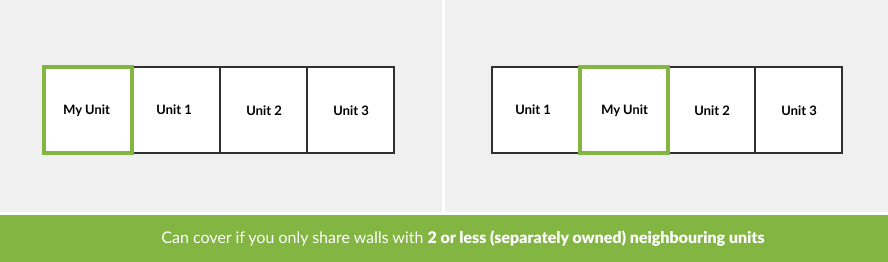
We can only offer insurance for a unit that –
- Does not share walls with more than two (separately owned) neighbouring units on any side. So if your property is one in a row of townhouses with no neighbouring units connecting behind or above yours, then we can provide cover.
- Has no other (separately owned) neighbouring unit above or below your unit, ie another unit or unit’s garage/carport stacked above or below yours.
- Does not share other building structure(s) with other units, eg common hallway.
- Is not part of or belongs to a Body Corporate.
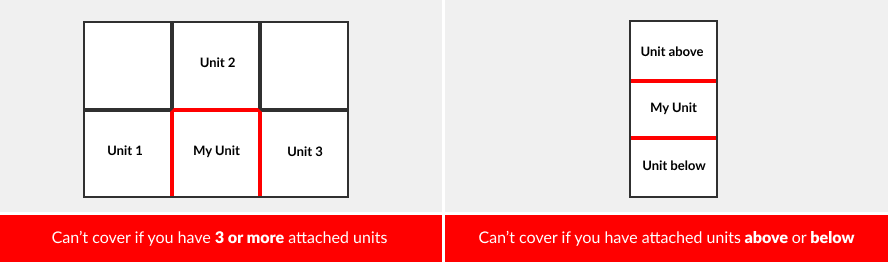
Part of a Body Corporate?
We can’t provide cover on any unit or dwelling that’s owned under a Body Corporate, as it’s the Body Corporate’s responsibility to insure the building, not the individual unit owners.
Our comprehensive personal contents protection under our own home policy is generally based on new-for-old cover. There are however a few items that are covered for their current value, where your payout will be based on the item’s present (or market) value. These are listed below. Please note that other criteria/limits apply – refer to your policy wording for full information.
| Market Value Replacement Items: |
| Books |
| Clothing & Footwear |
| Media, Software, Programs and Digital Data |
| Camping and Sports Equipment |
| Boating Accessories (not whilst attached to the boat, other limits also apply) |
| Remote Airplanes, and Accessories |
| Household Linen |
| Computers, Laptops over 5 years old |
| Camping Equipment |
| Watercraft, Watersport Equipment, and Accessories |
| Remotely Piloted Aircraft, over 2 years old, and Parts and Accessories |
| Sports Equipment, not including Golf Equipment |
| Bicycle, E-Bikes |
The items listed above are contents that will be replaced for its present value.
Don’t worry, all your other belongings that aren’t listed above will be covered on a new-for-old basis.
Can I specify any of the above items so that they are covered for more than their market (present) value? No, we are unable to alter your cover outside of these terms.
Related articles:
Initio is an online insurance underwriting agency, which is underwritten by IAG (AA financial strength rating).
Being 100% online means all payments, changes and cancellations are done instantly on the website, at a time that works for you.
We are property insurance experts, who specialise in landlord cover. We also offer a full range of cover across house and contents, holiday home and car insurances.
Using technology to make purchasing insurance easier means that there are no wait times when you need to speak to a customer service team member. Our state of the art customer dashboard allows policies to be fully managed online, putting our customers in the driver’s seat.
The customer dashboard allows customers to add or cancel policies, manage billing and review updates on claims. Submitting claims is also made easy through the dashboard, which guides you through the information that’s needed. Once submitted, a dedicated initio claim manager handholds the claim through the process from start to finish.
Online isn’t for everyone, but we believe it’s the only way to offer great cover, great service, at a fair price. Just ask any of the thousands of initio customers!
Watch the initio origin story
Common Queries
Learn more about initio
Understanding your cover with initio when you own a lifestyle block or a rural property
Owning a lifestyle block in New Zealand offers the best of both worlds – the comfort of a home and the freedom of rural living. Knowing your insurance policy well is key to ensuring you’ve got the cover you need. Here’s some things to consider when insuring your lifestyle block home(s) with initio. You can get insurance for your home if it’s on a lifestyle property with our standard house and contents cover. However, be aware of a few things, especially if it has extensive fencing, you run a business, or farming activities from your property.
What IS covered
Regarding your home, your policy outlines what is included in the definition section of the policy document. It includes (but is not limited to) the following items, providing they’re used solely for domestic residential (not commercial use, which includes farming) use;
- Outbuildings within residential boundaries*, such as a garage, woodshed, utility shed.
- Driveways of permanent construction that provide access to your home (gravel or shingle driveways are not covered).
- Patios, decks within residential boundaries*.
- Immediate fencing around your dwelling (and alongside the main driveway to the home) – please note that it does not include fencing outside of the residential boundary. In addition, a fence that borders a neighbouring property is covered for your share only (as determined by the fencing act).
- Walls including garden and retaining walls up to $25,000 (can be specified for a higher limit).
- Swimming pool and/or tennis court up to $45,000 (can be specified for a higher limit).
- Permanently sited water storage tank or septic tank.
We also include the following items so long as;
- they’re owned primarily for domestic use,
- but which may also have limited use for rural lifestyle purposes and
- they are not valued above the amounts shown below. If the items do have higher values, then there is no cover unless otherwise agreed and stated on your policy schedule:
- outbuildings that have limited use for rural lifestyle purposes such as for the storage of tools, animal feed, uninstalled equipment, or machinery and vehicles.
- private utility plant and associated equipment, including, but not limited to, wind or water mills, or diesel generators, with a replacement cost of no more than $10,000.
- Any bridge or culvert, permanent ford or dam, with a replacement cost of no more than $15,000.
- Any well or borehole including its pump, lining or casing, with a replacement cost of no more than $10,000.
* Within residential boundaries: In the context of lifestyle blocks, a “residential boundary” refers to the specific area of your property that surrounds your dwelling and is distinct from agricultural or paddock areas.
What’s NOT covered
- Farmer’s liability – Liability arising from farming activities, eg. stock/farm animals escaping and causing damage to third parties.
- Farm fencing (that’s not within residential boundaries*).
- Land outside of what’s provided under the NHC cover (see the link for land NHC will cover).
- Buildings used for business/commercial use (other than a home office).
- Live plants/trees.
- Stock/farm animals.
- Tractors.
- Farm bikes.

Key takeaways
Initio’s policy covers a residential home on a lifestyle block, including some limited farm use of buildings and contents. However, it doesn’t cover liability for farming activities or farming equipment. It’s important to know the exclusions, especially those related to farming activities, natural disasters, and specific property features. Always check your policy details and reach out if you have any concerns.
If you have specific questions, feel free to contact us. We’re here to help you understand and maximize your coverage where we can.
Get a quote
Other articles of interest:
Despite tighter laws and more public awareness, methamphetamine remains a serious problem in New Zealand. Not just for law enforcement and health agencies, but for landlords, property managers and homeowners too.
Meth in Aotearoa: the facts
- New Zealanders are consuming 27.5 kilograms every week, based on nationwide wastewater testing at the end of 2024, an increase of 96% from records in 2023.
- That equates to an estimated $28 million in social harm every single week.
- We remain in the top four countries globally for meth use per capita:
- Australia
- United States
- Czech Republic
- New Zealand
These aren’t just distant statistics. For property owners, meth contamination can mean costly clean-ups, extended vacancies, and insurance stress.
Recent events underscore the ongoing issue. In April 2025, Customs officers seized an estimated 90.7 kilograms of methamphetamine in two separate incidents at Auckland International Airport. These seizures prevented an estimated NZ$95 million in potential harm and cost to New Zealand.
Additionally, wastewater testing has shown methamphetamine use tripled in Northland last year, which now has the unenviable title of meth capital of New Zealand.
How meth affects your property
Meth is usually smoked inside, which leaves behind chemical residue. This residue can settle on walls, ceilings, carpet, and furnishings. If contamination levels are high enough, the home may be considered unsafe to live in until it has been professionally decontaminated.
How does insurance handle these claims?
With initio, meth claims are covered under our Landlord / Holiday Home policies:
- Cover is up to $30,000, with a $2,500 excess.
From 2023 to now:
- The average claim we’ve settled is $24,800
- Just under 20% of those claims hit the $30,000 limit
- The average duration of a claim is 120 days
Typical cost breakdown
A meth claim isn’t just about one thing. Even minor contamination can lead to significant costs. The $24,800 average usually covers:
- Testing (initial composite + room-by-room detailed testing)
- Specialised decontamination cleaning
- Post-clean testing of the affected rooms
- Remediation (replacement of contaminated soft furnishings such as carpet and curtains etc)
- Loss of rent
So, does NZ still have a meth problem?
Yes. While it might not make headlines as often, the data paints a clear picture. For landlords, it’s still a risk worth understanding – and preparing for.

Related support articles
External links
When you insure your belongings, you pick a total amount of cover for everything. But, some items still have a sub-limit on how much they’re covered for. For the items in the table below, if you think something is worth more than this limit, you can add it as a specified item. The described, specified item will then have a high upper limit in the event of a claim.
If you’ve already got your Own Home contents cover with initio and want to add a specified item, please login to your initio dashboard and use the “change” and then “cover” options to specify any of the below items in your contents cover. More information about making changes to an existing policy can be found here.
The limits on jewellery, watches, bicycles, drones and collections can be increased if you specify a higher amount (for up to a maximum limit of $20,000 per item). The watersport equipment can be increased for equipment but not for any watercraft. For example, a fishing rod valued over $2,000 can be specified but a powered, runabout dinghy over $2,000 cannot. The powered dinghy would require a separate marine policy.
|
|
|
Jewellery & Watches:
|
$3,000 per item |
Camera or Camera Equipment:
|
$3,000 per item |
Bicycles (Present value):
|
$2,000 per bike |
Watersport Equipment (Present value) for any watercraft not powered by motor or sail, eg. surfboard, paddleboard, dinghy, kayak:
(Our contents policy cannot cover any watercraft powered by motor or sail, with a value of more than $2,000) |
$2,000 per item |
Drone / remote controlled aircraft (Replacement if less than 2 years, otherwise present value):
|
$3,000 per item |
Collections (Stamps, medals, coins):
|
$3,000 per collection |
It’s important to note that some categories of contents are still insured for their present value (read more), so make sure you are specifying the amount for present value or replacement value depending which applies.
As an example, bikes are insured for their present value. If you purchased an e-bike 2 years ago for $8,000 it may only be worth $5,000 today (present value). In the event of a claim, your settlement would be based on the present value, (in this example $5,000). Since this is over the $2,000 policy limit for bicycles, you would need to specify the present value, otherwise the claim would be limited to $2,000.
Since the present and replacement value of items changes over time, we recommend that each year you check the present or replacement values (depending which applies) for your items. If they’re insured for more than their value (replacement or present value, depending on the type of contents), you’re paying extra for no real benefit.
Multiple Items of Jewellery
For any single piece of jewellery or watch, there is a policy limit of $3,000 unless the item is noted as a specified item.
For any jewellery that is not specifically specified there is a maximum payment limit for any one event.
Unless a different maximum payment amount is shown in the schedule, the most we will pay for any event for multiple items of jewellery and watches (that are not separately specified) is $15,000.
For example, if you lose 10 pieces of jewellery in one event, each with a value of $2,000, the most we will pay is $15,000 unless we have previously agreed to increase the limit to $20,000..
Camera or Camera Equipment
Any piece of camera equipment is limited to $3,000 per item unless specified. Please note that our contents policy does not cover items used for earning income. If you use your camera equipment for earning income, you will require a separate commercial insurance.
E-Bikes
We can insure e-bikes on your contents policy provided that they are “pedal operated bicycles with motor assistance” If the motor is the primary source to propel the bicycle then the NZTA considers those to be classed as a vehicle and they would therefore need to be insured under a motorcycle cover. Visit NZTA to learn more. Don’t forget to specify your e-bike if its present value is over $2,000.
Drones / Remote controlled aircraft
The cover is automatically provided under your existing home contents policy for drones and their accessories for up to $3,000, provided the drone is;
- only used for personal use (ie. Not commercial/business) and
- is operated within NZ Aviation legislation and
- reasonable precautions/care are taken when securing and operating the drone
Drones are insured for replacement value whilst they are under 2 years old, present/market value applies for drones over 2 years old.
If you would like to know more, please contact us.
Watersport Equipment
Our contents cover does not cover any watercraft powered by motor or sail, with a value of more than $2,000. Please arrange marine/boat insurance with a relevant provider if required.
Antiques & Works of Art
While it’s not a requirement to list these as specified items on your policy, it is important to disclose them when applying for cover (under the general disclosure question) — especially if you have individual items valued at more than $25,000.
If you have works of art or antiques individually worth more than $25,000, please provide the details when completing your insurance application. Items of this value are considered material information and need to be reviewed by our underwriters before we can confirm cover.
As part of the review, we’ll need copies of the latest valuations, along with details of any security and fire protection measures in place.
Other Valuable Items
Generally, most personal contents items don’t need to be specified separately. Examples include personal medical devices such as hearing aids or insulin pumps, musical instruments, luxury items like handbags or shoes, and electronic equipment for your own personal use. These are covered under your main contents sum insured, with no sub-limit applied.
If you’re unsure whether a specific item is covered or needs to be noted, please check your policy wording or get in touch with our support team for guidance.
Initio Replacement Contents Cover
Related support articles:
New Zealand’s Leading Insurer Urges Government Action on Flood Resilience
New Zealand’s most prominent insurance provider, IAG, has called on the newly formed government to make flood resilience a top priority. This appeal comes in the wake of insurance claims exceeding $1 billion due to the summer storms, including the North Island floods and Cyclone Gabrielle. These figures are second only to the costs incurred by the Christchurch earthquakes.
IAG (initio is backed by this insurance giant), have shared insights from their latest Wild Weather Tracker. This report discloses the settlement of a staggering 51,000 claims related to these weather events. The data reflects high settlement rates across various categories including motor, contents, and home insurance.
The Wild Weather Tracker also sheds light on the rising economic impact of climate change, noting an upward trend in average claim costs. Regions like Hawke’s Bay, the West Coast, and Gisborne Tairāwhiti have emerged as the most affected in terms of weather-related claim costs.
For a detailed view of the November 2023 Wild Weather Tracker, visit IAG’s website.
On the questions of: how does Initio make money? Does Initio charge fees? It is first important to know what type of business initio is:
Initio is an Underwriting Agency of registered insurer IAG. Initio is not an insurance company in its own right. This means that initio has delegated authority from the insurer to establish and manage insurance for houses, contents and cars. In addition, Initio has authority to pay claims on behalf of the insurer.
Initio is a licensed Financial Advice Provider under the Financial Markets Authority of New Zealand. Initio have staff who are Registered Financial Advisors, which enables initio to provide customers with insurance advice specific to their situation.
On the sale of an insurance policy, including its subsequent renewal, initio is remunerated by commission and fees. The commission is a payment that recognises the cost of delivering such functions, administration, and services that would otherwise be a cost to the insurer, and the fee is a transaction and platform fee designed to recover costs associated with transaction processing including bank and payment provider processing costs, credit card merchant charges, and obtaining property risk and vehicle data, and regulated financial advice. For details of charges and remuneration see our disclosure statement, and/or refer to the quote and invoice when transacting with us.
Related Articles
Your safety on the road is our priority, and we’ve taken comprehensive measures to ensure you’re covered in every situation. Here, you’ll find everything you need to know about our optional cover for roadside assist service.
Roadside Assist Overview
Initio, backed by IAG, is committed to providing comprehensive support to its existing customer base. Our partnership with First Rescue enables us to offer a wide range of roadside assistance services. Whether you’re facing a flat battery, lost keys, or a breakdown, our support team is always here to help.
With our new Roadside Assist portal, getting back on the road has never been easier:
Roadside Assist portal
You can also reach Roadside Assistance at 0800 694 555.
Roadside Assist Services Include:
- Jump Start & Battery Replacement
- Breakdown Tow
- Keys Locked & Lost Support
- Wrong Fuel Assistance
- Car tyre Services
- And more!
Please note that some exclusions apply, such as unattended vehicles, towed vehicles such as boats, trailers or caravans, vehicles bogged down on non-public roads, or any vehicle exceeding 4.5 tonnes.
Roadside Assist is only intended for breakdowns, lost keys, and similar issues. Don’t use this service if you’ve had an accident.
How to Add Roadside Assist Cover
Whether you’re an existing customer or new to Initio, adding Roadside Assist Cover is a breeze. Roadside Assist can be added to your policy (full cover only) for a nominal fee, the details of which will be visible once you include it in your coverage. Here’s how:
For Existing Initio Customers:
- Log into your Initio dashboard.
- Find your vehicle policy section.
- Modify your policy to include Roadside Assist.
- Confirm the addition, and you’re all set!
For New Customers:
New to Initio? No worries! Simply add Roadside Assist to your vehicle policy as you set up your account with us.
Please note:
- Vehicle cover through initio must be paired with other insurance policies and cannot be purchased as a stand-alone option.
- Roadside Assist is only available with full cover vehicle cover.
Emergency Assistance
Now help is just a few taps away. If you’ve purchased the new Roadside Assist Online service, getting back on the road has never been easier:
Roadside Assist Online
If you are in an emergency and need immediate help, you can also call the 24/7 helpline 0800 694 555.
What about in the case of an accident?
- Always inquire about the well-being of everyone involved.
- Arrange a tow ASAP, the tow is covered under your vehicle policy if you have full cover on the damaged vehicle.
- Advise the police within 24 hours if anyone is injured.
- If no injury, you must give your name and address to any Third Party (and collect theirs). Inform the police within 48 hours if you cannot find the Third Party.
- If an animal is injured, advise the owner or call the SPCA on 0800 447 722.
Lodge your claim online to get a claim underway, or call us on 0800 763 929 if you need urgent assistance in relation to a vehicle collision.
Accommodation, Repatriation, Taxis:
Please be aware that these services are not included in your roadside assistance package; however, they may be covered under the terms of your specific vehicle policy.
You can find more information about all of our policy wordings here
Your safety is our priority. Keep this page handy for any roadside emergencies, and know that Initio is always here to help!
Related Articles
Burglary prevention is as equally important for holiday homeowners and landlords, as it is for one’s own personal residence. Burglary is not just about having your contents stolen; there is also the damage that thieves can cause trying to gain access to the property.
Holiday homes are particularly vulnerable as they are often left unoccupied for extended periods of time.
Landlord Insurance cover is designed to protect you when the worst happens, but as a landlord and property owner there steps that you can take to prevent having to deal with the heartache and distress of someone illegally entering your property, and ultimately having to make a claim on your policy. Here are some tips to prevent opportunistic burglars from targeting and gaining access to your property.
- Check window joinery and replace or repair any loose latches.
- Consider installing security stays on windows.
- Fit deadlocks / deadbolts to all external doors; especially older doors and ranch sliders which can be easier to obtain access.
- Install a burglar alarm and advertise the presence of an alarm.
- Install exterior sensor lights, or check that existing lights are working correctly
- Don’t advertise that you are away; keep the lawns mowed and the mail box clear.
Good security makes people feel safe; it also has the added benefit of retaining good and long term tenants.
First Home Buyers – Chris and Jen

Young couple Chris and Jen recently completed every young couples dream and purchased their first home. In a hot property market this is not an easy task. With house prices continuing to rise and larger deposit’s required upfront, getting your foot in the door can seem overwhelming and impossible at times. But after growing up in Zimbabwe where land ownership is fraught with controversy, nothing was going to stand in the way of Jen’s dream.
After looking for a year, Jen and local Hamilton lad, Chris found their perfect first home in the Hamilton suburb, Fairfield. Now that they have accomplished their first property milestone, initio plans to continue to support this couple as they grow their property portfolio. The couple plan to use this home as a stepping stone into something bigger before they find their dream holiday home.
Why do you insure with Initio?
Initio was recommended to us, and we were instantly impressed with the competitive pricing to insure our home and our contents. The sign-up process was quick and easy during the stressful last days of purchasing our home.
Best advise you can give to other first time home buyers?
It’s okay to miss out on the first house you make an offer on. We were lucky securing the second house we made an offer on. Which ended up being twice as good as the first. Look at as many places you can as early as possible and you will soon realise exactly what you’re after. After a while looking we knew from the which places weren’t worth looking at & what suburbs were best. Real Estate Agents websites tend to show listing first before they hit Trade Me or realestate.co.nz, so go to the likes of Lugtons first if you want to possibly get an early viewing. Check out whether you’re eligible for any grants such as the Home Start Grant. The Government is willing to help first home buyers and every little bit helps towards your deposit. A good mortgage broker will break down what you can afford and what your repayments may be. It was a stressful and long process purchasing our first home. But with the help of people like initio, once we found our home – it all happened very quick.